In the great COVID-19 debate, one question has sparked more curiosity than a cat video on the internet: Is it airborne or droplet? Picture this: you’re at a party, and someone sneezes. Do you duck for cover or casually sip your drink? Understanding how this virus spreads is crucial, and it’s more than just a matter of etiquette.
Overview of COVID-19 Transmission
COVID-19 transmission occurs primarily through respiratory particles. These particles can be categorized as either droplets or aerosols, which influence the risk of infection. Droplets are larger; they typically travel short distances. When an infected person coughs or sneezes, these droplets can land on surfaces or directly on another person within approximately six feet.
Aerosols, on the other hand, are smaller particles that can remain suspended in the air for extended periods. They can travel farther than droplets, particularly in enclosed spaces with poor ventilation. Studies indicate that aerosol transmission poses a significant risk in areas where social distancing is difficult.
Research shows that both droplet and airborne modes play a role in the spread of COVID-19. The World Health Organization acknowledges aerosol transmission in specific settings, particularly crowded indoor environments.
Protective measures are essential to minimize transmission risk. Masks significantly reduce the emission of respiratory particles from infected individuals. Proper ventilation and air filtration systems can also decrease the concentration of viral particles in the air.
Data underscores varying infection rates based on environmental factors. In poorly ventilated settings, the likelihood of airborne transmission increases. Consequently, understanding transmission dynamics helps inform public health guidelines and personal safety measures. Prioritizing evidence-based strategies enables individuals to better protect themselves and others from COVID-19.
Understanding Droplet Transmission

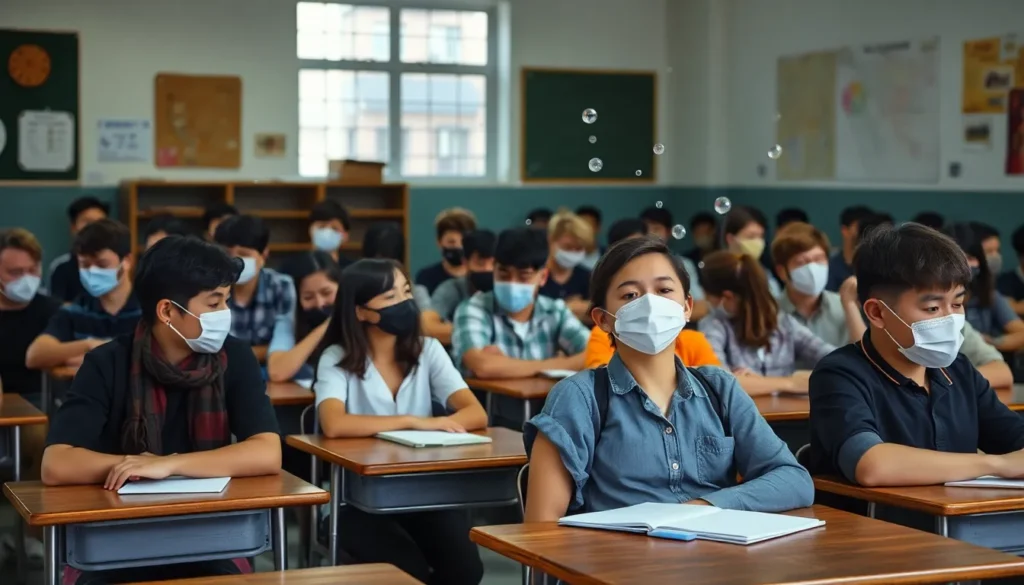
Droplet transmission refers to the spread of infections through larger respiratory droplets. These droplets typically measure over 5 micrometers in diameter and travel short distances, usually up to six feet. Droplets often land on surfaces or individuals nearby, making close-contact scenarios significant in virus transmission.
Definition and Characteristics
Droplets form when an infected person coughs, sneezes, or talks. An important characteristic of droplets is their size, which prevents them from remaining airborne for extended periods. Direct exposure typically involves being within close proximity to an infected individual. Often, droplets can carry pathogens to mucosal surfaces, such as the mouth, nose, or eyes. Key preventive measures like wearing masks greatly reduce the risk of droplet transmission in social interactions.
Examples of Droplet Transmission
Numerous situations exemplify droplet transmission in daily life. Attending gatherings where someone sneezes nearby often leads to droplet exposure. Sharing indoor spaces, such as classrooms or offices, increases the likelihood of contact with respiratory droplets. Close-range conversations also pose significant risks, particularly in crowded environments. Moreover, specific activities like singing or shouting can propel droplets further, enhancing transmission potential. Understanding these examples highlights the need for vigilance in maintaining physical distance and adhering to health guidelines.
Exploring Airborne Transmission
Airborne transmission plays a significant role in how COVID-19 spreads. Understanding its characteristics helps clarify risks associated with various settings.
Definition and Characteristics
Airborne transmission occurs when tiny respiratory particles, often smaller than 5 micrometers, remain suspended in the air. These particles can linger for hours, leading to wider dissemination within enclosed spaces. Inadequate ventilation enhances this risk, allowing aerosols to accumulate. Unlike larger droplets that quickly settle, airborne particles can travel greater distances, reaching individuals beyond six feet. According to the World Health Organization, both droplet and airborne pathways contribute to the virus’s spread, particularly in crowded locations. The sustained presence of these aerosols emphasizes the need for effective ventilation and filtration systems in indoor environments.
Examples of Airborne Transmission
Airborne transmission can occur in various everyday scenarios. Indoor gatherings without proper ventilation exemplify one high-risk situation. Restaurants, offices, and schools can facilitate this type of spread when spaced closely together. Singing, shouting, or even talking loudly increases aerosol production, thereby heightening the infection risk. Enclosed public transportation, like buses and subways, also serves as a prime landscape for aerosol transmission. Studies show that cases frequently arise in situations where aerosols can circulate freely among individuals. These examples highlight the importance of maintaining preventive measures such as proper airflow and wearing masks in crowded settings.
Key Studies and Findings
Research has extensively examined the transmission modes of COVID-19, offering valuable insights into droplet versus airborne dynamics. Studies highlight that droplets, which measure over 5 micrometers, predominantly spread through close contact situations, such as talking or coughing in proximity. In contrast, aerosol particles, smaller than 5 micrometers, can linger in the air and travel farther, particularly in poorly ventilated areas.
Research on Droplet vs. Airborne
Numerous studies indicate that both droplet and airborne transmission contribute to COVID-19 spread. One study showed that infection rates soared in poorly ventilated venues, underscoring the risks associated with airborne transmission. The CDC has reported that airborne particles can remain suspended for hours, facilitating transmission across greater distances than previously understood. Evidence from various settings suggests that factors like ventilation and density significantly affect how the virus spreads.
Implications for Public Health
Understanding these transmission modes informs public health strategies. Vaccination efforts become crucial alongside the promotion of preventive measures such as mask-wearing and enhancing ventilation in indoor spaces. Public health officials emphasize the necessity of guidelines addressing both droplet and aerosol transmission to mitigate risks effectively. By focusing resources on high-risk environments, communities can better safeguard vulnerable populations.
The ongoing discussion around COVID-19 transmission highlights the complexities of how the virus spreads. Recognizing both droplet and airborne transmission is essential for effective prevention strategies. By understanding these modes of transmission individuals can make informed choices to protect themselves and others.
Preventive measures such as wearing masks and improving ventilation are crucial in reducing risks associated with both types of transmission. As public health guidelines evolve it’s vital for communities to stay informed and adaptable. Prioritizing safety in high-risk environments can significantly impact the fight against COVID-19 and safeguard public health.